
Compliance & Safety
Paperwork that protects people and stands up to audit.
SOPs, risk assessments, permits and inductions written by engineers who have held the pen on site — not drafted in an office by someone who has never done the job.
What we find on most sites
- Documentation written at a distance from the work, then quietly worked around
- A compliant file sitting over an uncontrolled risk
- SOPs too long to be read before the job rather than after the incident
- Permit systems that cost half a shift to complete
- Evidence assembled after the fact, once an audit is already running
What you are left with
- SOPs and risk assessments written from the task as performed
- Documents short enough to be read before the job
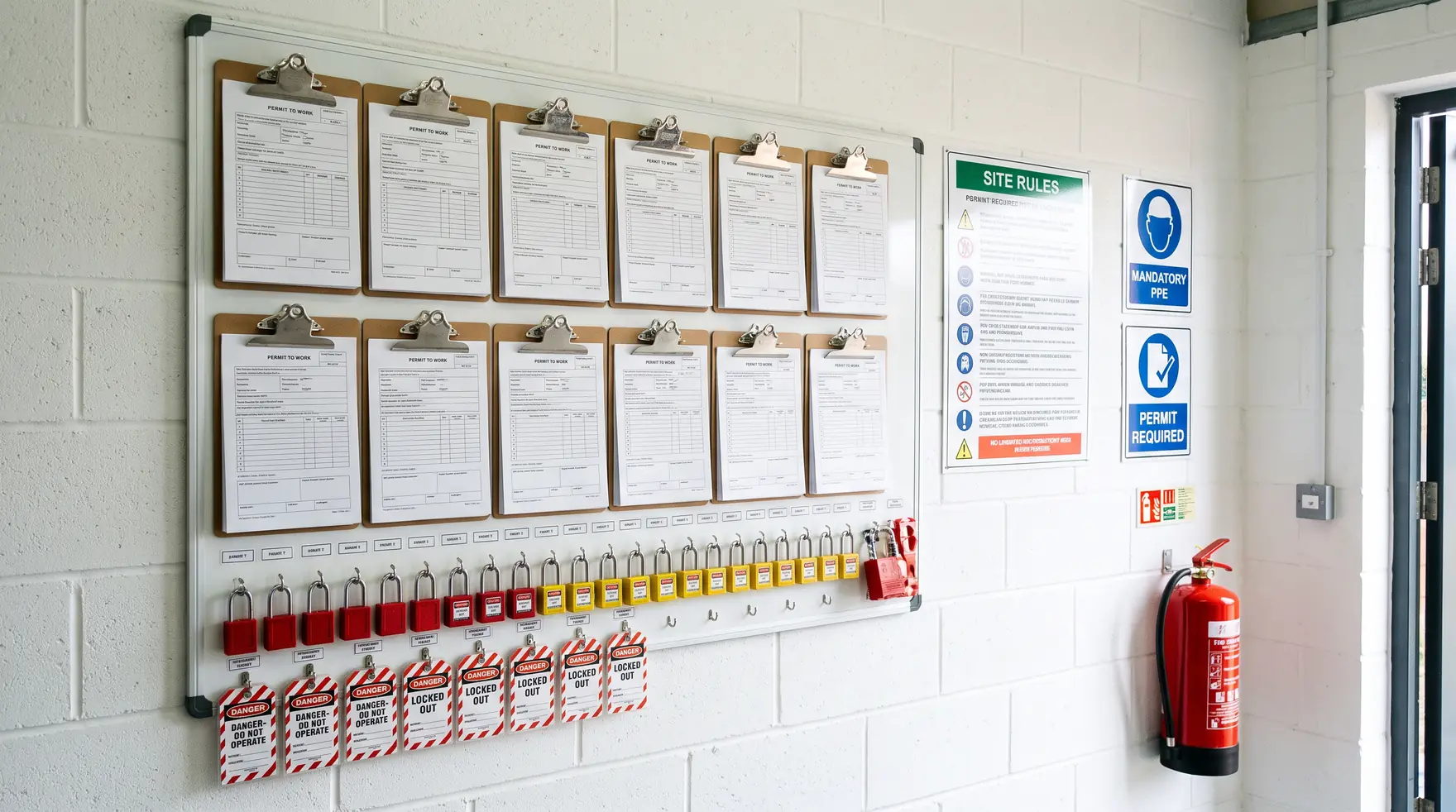
- Permit-to-work and contractor control that works on a busy site
- Lock-off and induction processes people can complete on shift
- An evidence trail assembled as you go, not reconstructed
SOPs and risk assessments
Proven formats, written from the task as performed. Specific enough to be useful and short enough to be read before the job rather than after the incident.
Permit and contractor control
Permit-to-work systems and contractor control that function on a busy site — including lock-off arrangements and induction processes that people can complete without losing half a shift.
Audit-ready evidence
The documentation trail assembled as you go, so an audit is a matter of retrieval rather than a scramble. Evidence gathered after the fact never looks as good as evidence gathered as standard.
Common questions
What makes safety documentation actually get used?
It has to describe the job as it is really done. Documentation written at a distance from the work gets quietly worked around, which leaves you with a compliant file and an uncontrolled risk — the worst of both.
We write from the task, in the language the people doing it use, and keep the evidence trail an auditor will look for.
Can you review what we already have?
Yes, and that is usually the sensible starting point. Most sites have a reasonable amount of documentation with specific gaps, rather than nothing at all.
Do you cover machinery safety on automated systems?
Yes. Automated warehousing brings particular issues around access, isolation and interlock integrity — and safety devices such as light curtains, which our repair partners also test and repair.
Tell us about your site.
No call centres and no account managers reading a script. You will hear back from a founder.
The rest of the network
Six disciplines, one contract, one point of contact. Most sites start with one and pull in the others as they go.