
Stores & Inventory
The right part, on the shelf, findable at 3am.
Stockouts trigger emergency orders and quietly drain uptime. We put in the visual standards, the data and the workflows that stop that happening.
What we find in most stores
- Stockouts that trigger emergency orders and quietly drain uptime
- Too much of what is cheap on the shelf, too little of what is critical
- Holding levels set by history and habit rather than by consequence
- A stores only an experienced storesperson can navigate
- Stock records that have drifted away from what is physically there
- Obsolescence discovered at the point of stockout, not before
What you are left with
- Stock ranked by the consequence of not having it
- Holding levels set from lead time, downtime cost and availability
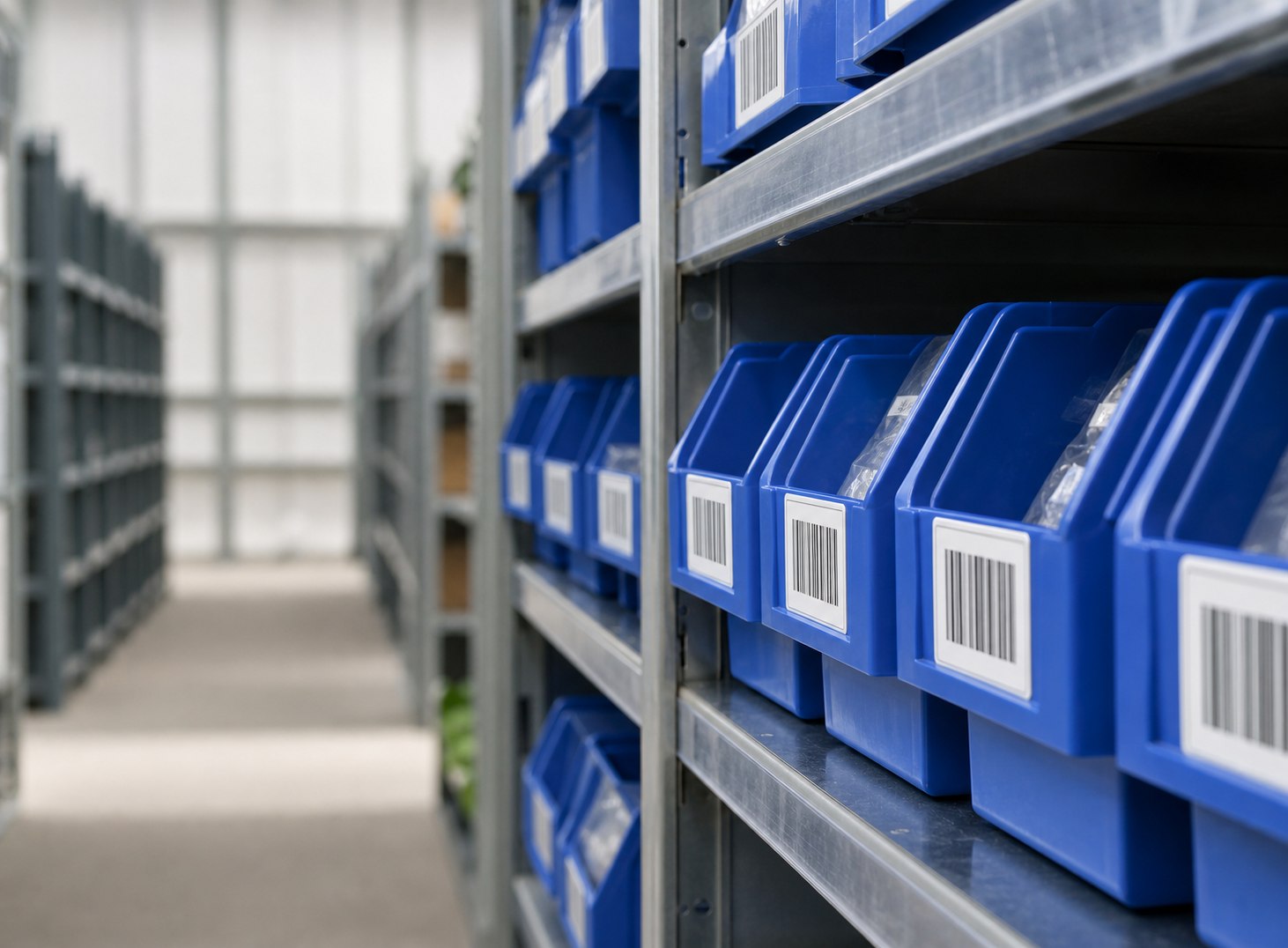
- Labelled racking, shadow boards and marked bin locations to 5S
- Accurate digital inventory with sensible min/max levels
- Demand changes and obsolescence risk flagged as they emerge
- A workflow that keeps the data true after we leave
Criticality assessment
Not every part deserves shelf space. We rank stock by the consequence of not having it — lead time, cost of downtime, whether an alternative exists — and set holding levels from that rather than from history and habit.
Visual standards that survive a night shift
Labelled racking, shadow boards and clearly marked bin locations, set up so the right thing is obvious to someone who has never been in the stores before. A system only an experienced storesperson can navigate is a single point of failure.
Digital inventory and demand
Accurate stock records, sensible reorder points, and demand changes flagged as they emerge rather than discovered at the point of stockout. Obsolescence risk is surfaced early, while there is still time to do something about it.
Common questions
What does an engineering stores transformation involve?
It starts with criticality: working out which parts actually matter, based on what they are fitted to and what happens when that stops. Most stores hold too much of what is cheap and too little of what is critical.
From there it is physical organisation to 5S standards, accurate digital inventory with sensible min/max levels, and a workflow that keeps the data true once we leave.
Can you work with our existing CMMS?
Yes. The aim is to make what you already have work properly, not to sell you a replacement. Where a system genuinely cannot support what you need, we will say so.
How long does a stores transformation take?
It depends on the size of the stores and the state of the data. Criticality assessment and a plan is a matter of weeks; physical reorganisation is usually staged so the stores keeps running throughout.
Tell us about your site.
No call centres and no account managers reading a script. You will hear back from a founder.
The rest of the network
Six disciplines, one contract, one point of contact. Most sites start with one and pull in the others as they go.